About the project
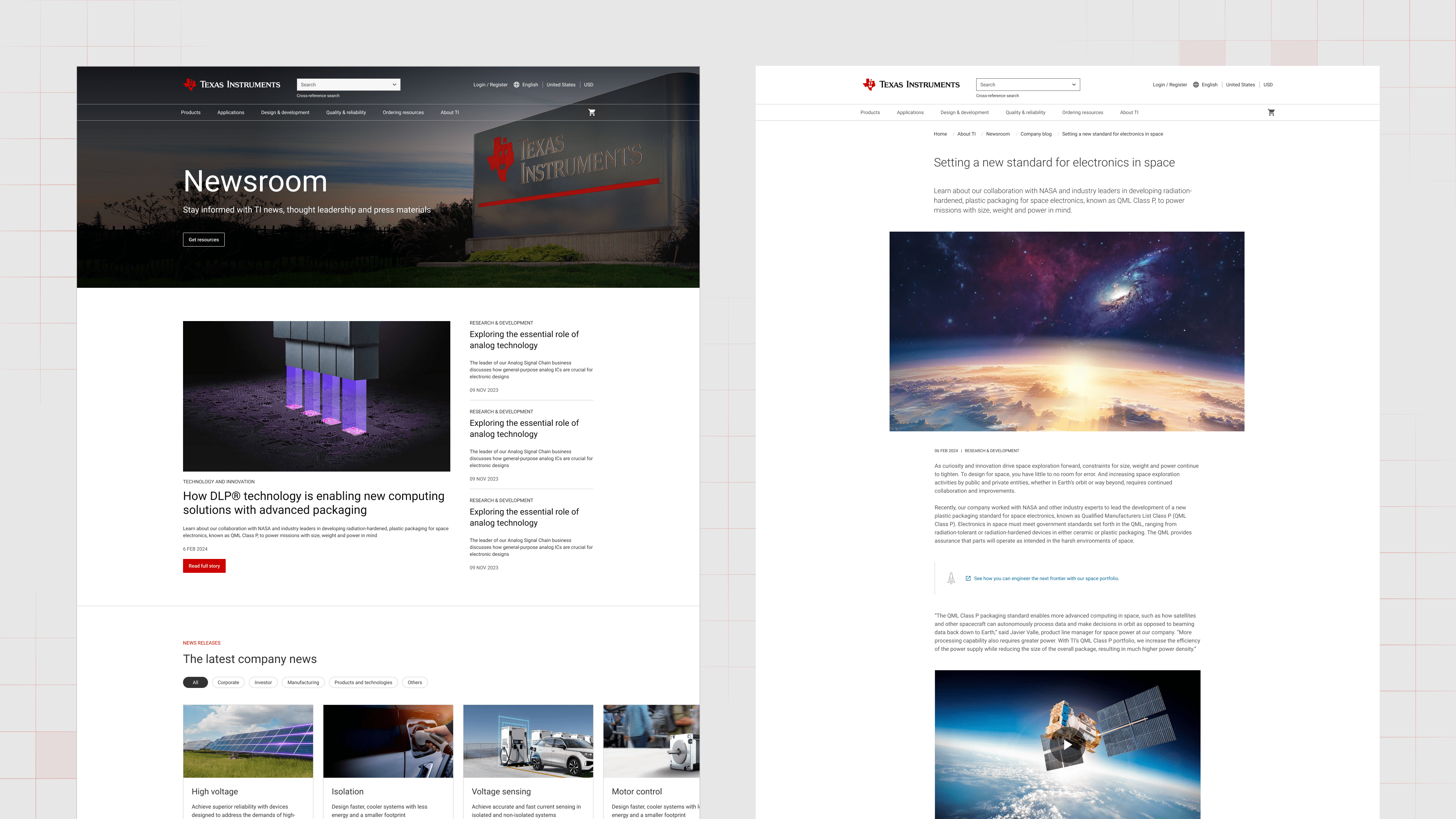
As part of Texas Instruments' CI/CD initiative, customers have access to snapshot releases for software – which are interim versions offering new features and fixes between major stable releases.
However, due to the complexity of navigation, lack of clear versioning systems and release information were making the experience confusing, frustrating and tedious for TI's customers. I led the UX strategy and design for reimagining the experience, enabling developers to quickly find, assess and download the right version based on their requirements.
Problem
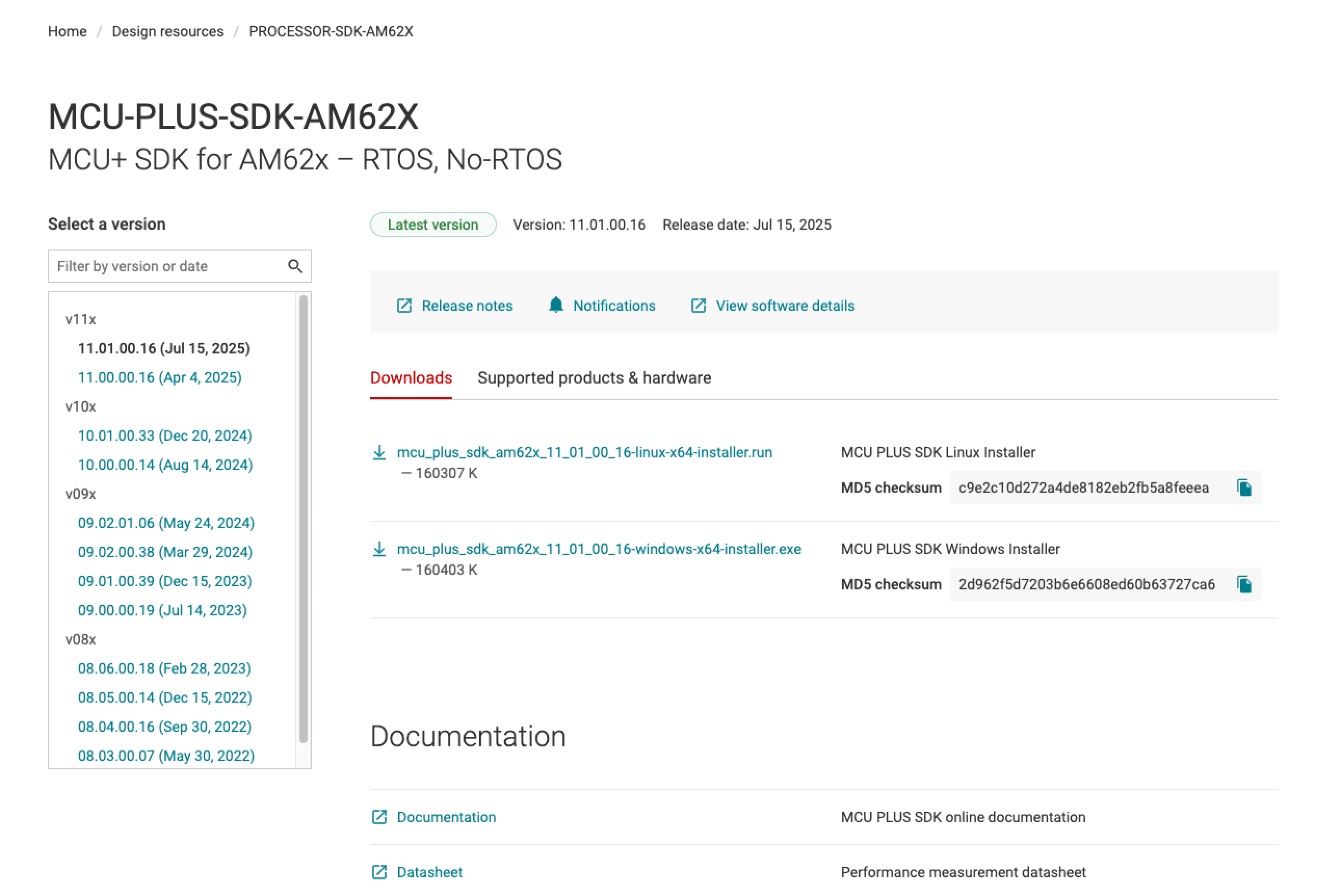
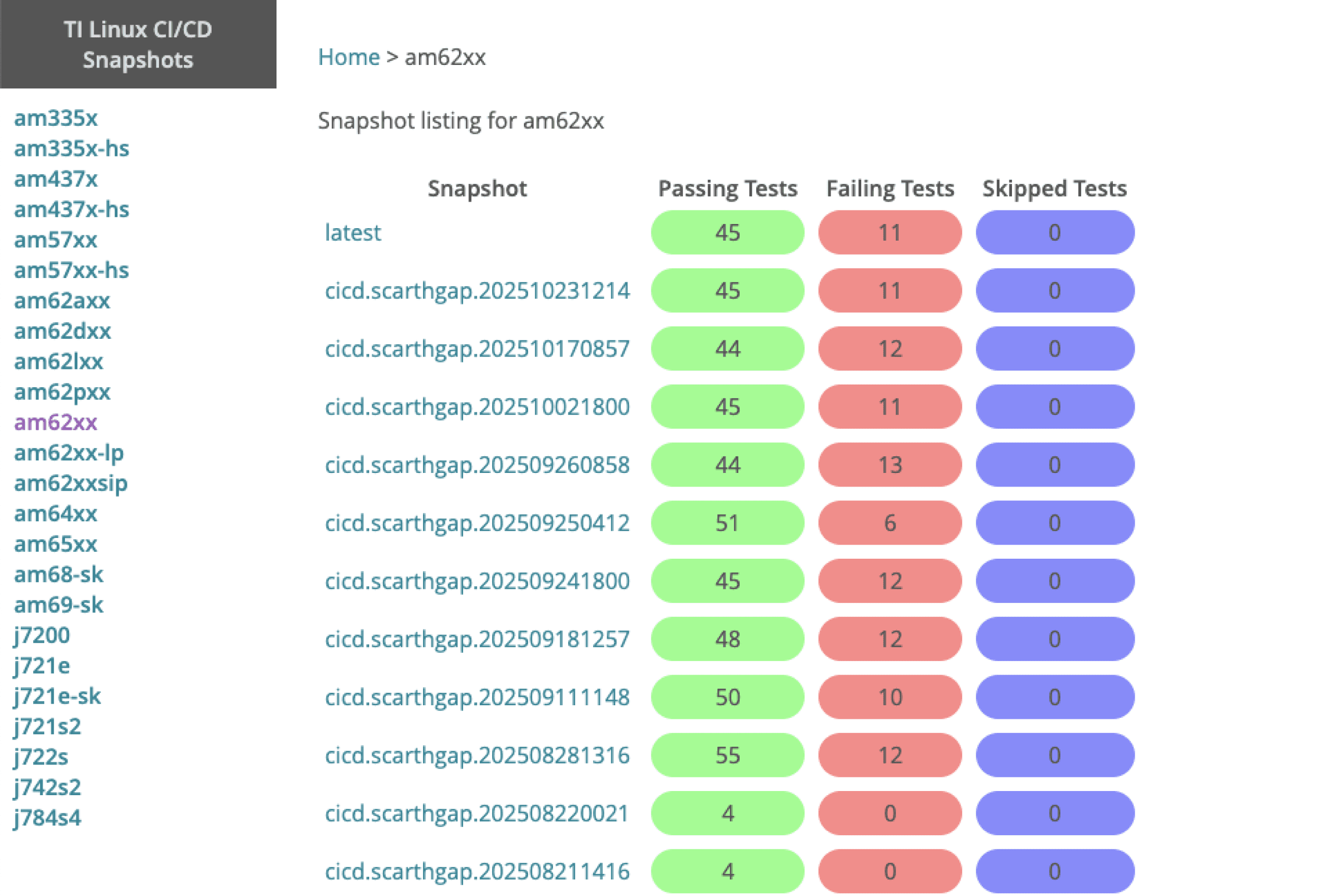
Developers were unable to find the software snapshots they needed as they couldn't assess the stability of available versions. The initial interface lacked clarity between the two types: (a) stable versions and (b) snapshots which are pre-release versions.
Pain points
- Problematic navigation: No distinction between the two types of software.
- Inaccessible information: Critical information such as test results, release notes and new features were buried in deeper pages.
- System inconsistencies: The user flows for software downloads was different for stable releases and snapshots.
Solution
With our redesign of the Software downloads portal, we aimed to make it easy and quick for customers to find the right software.
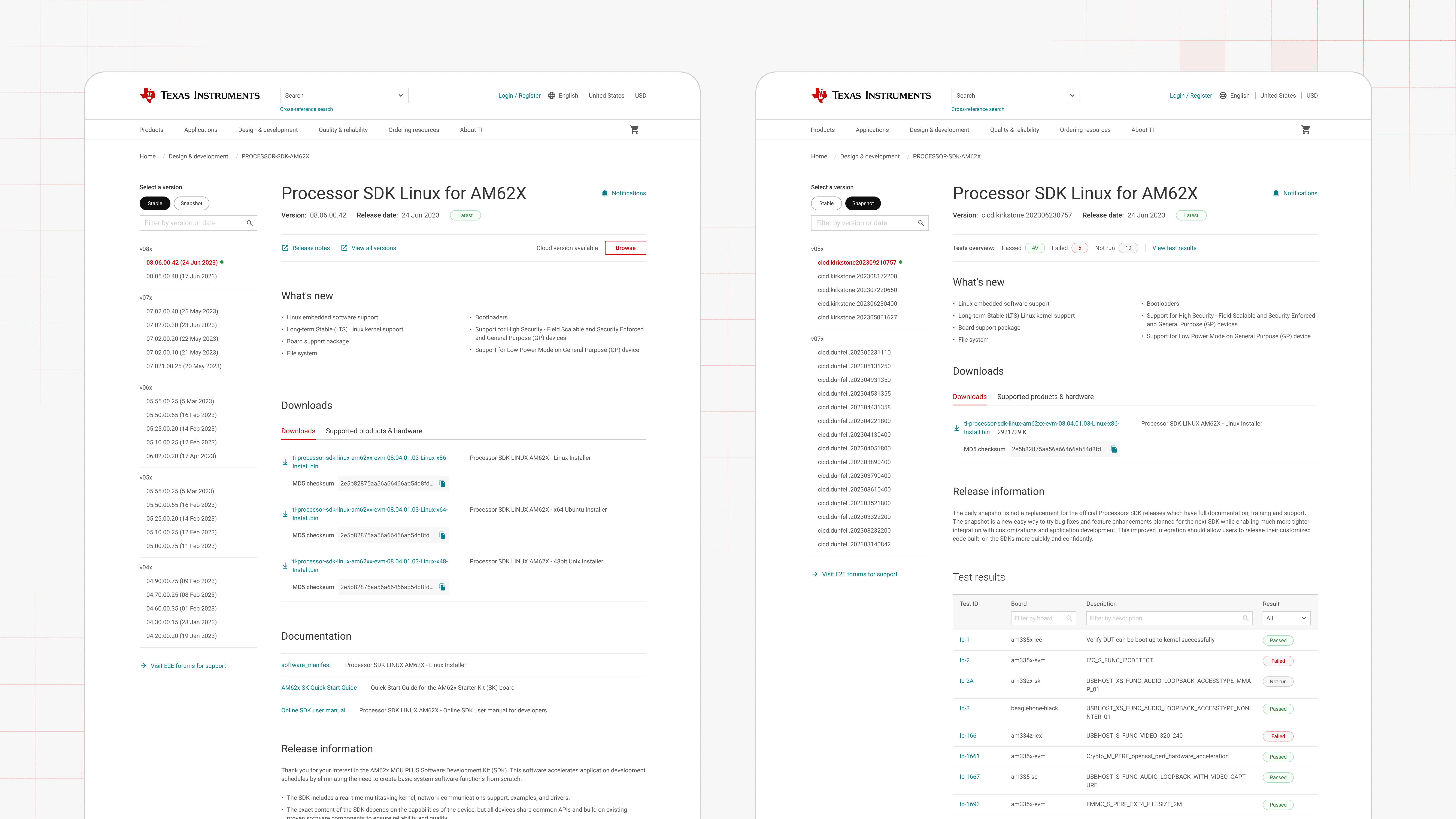
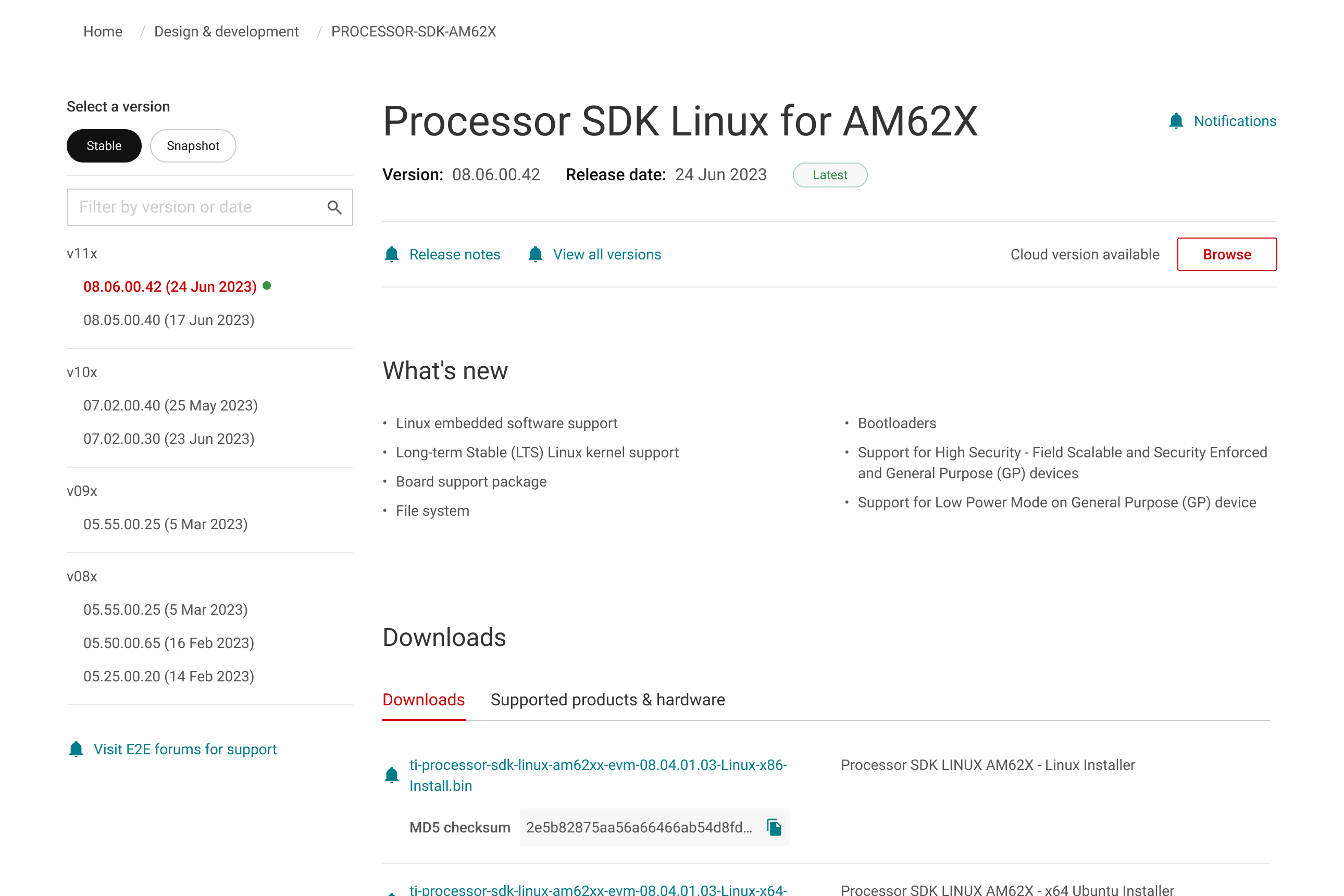
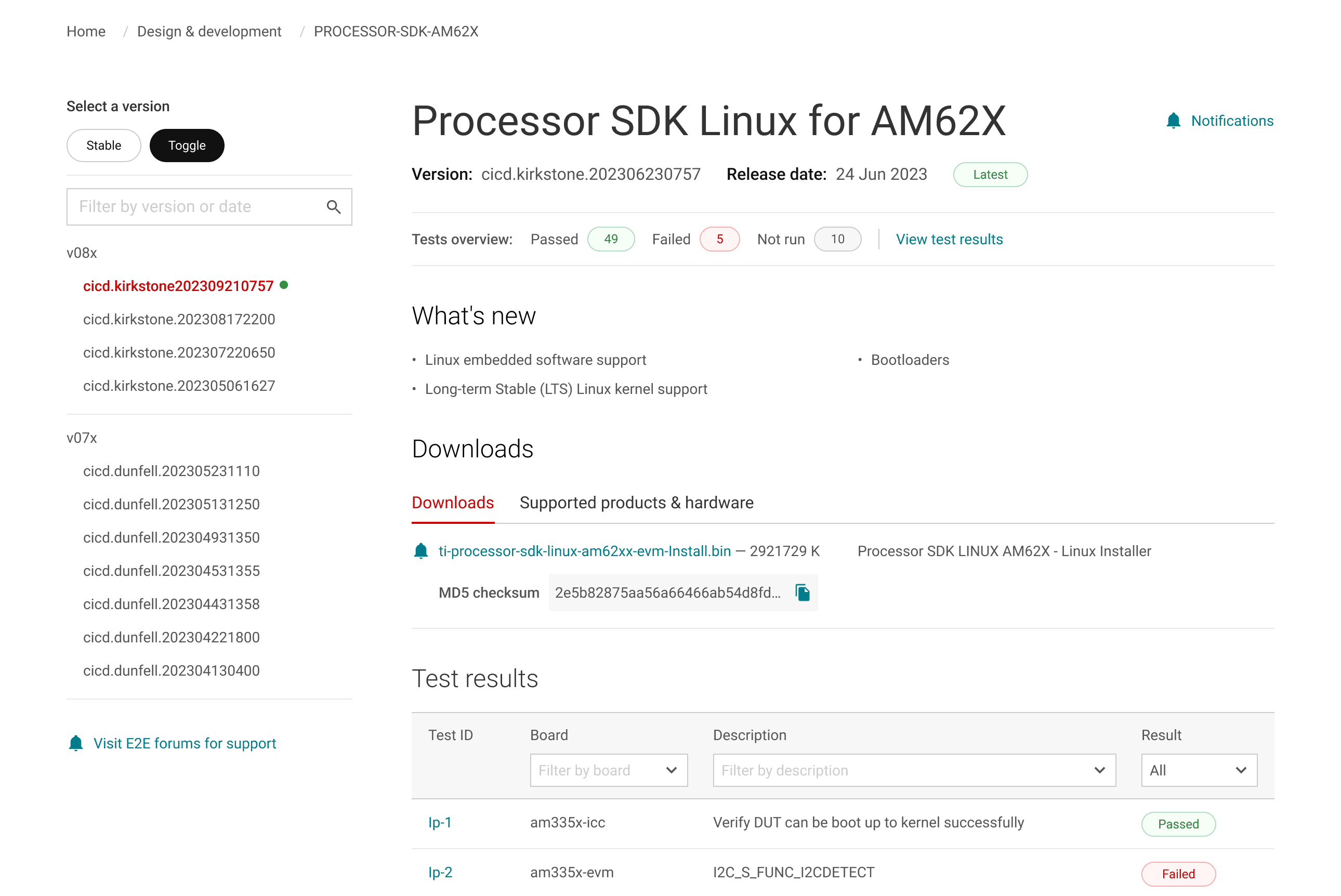
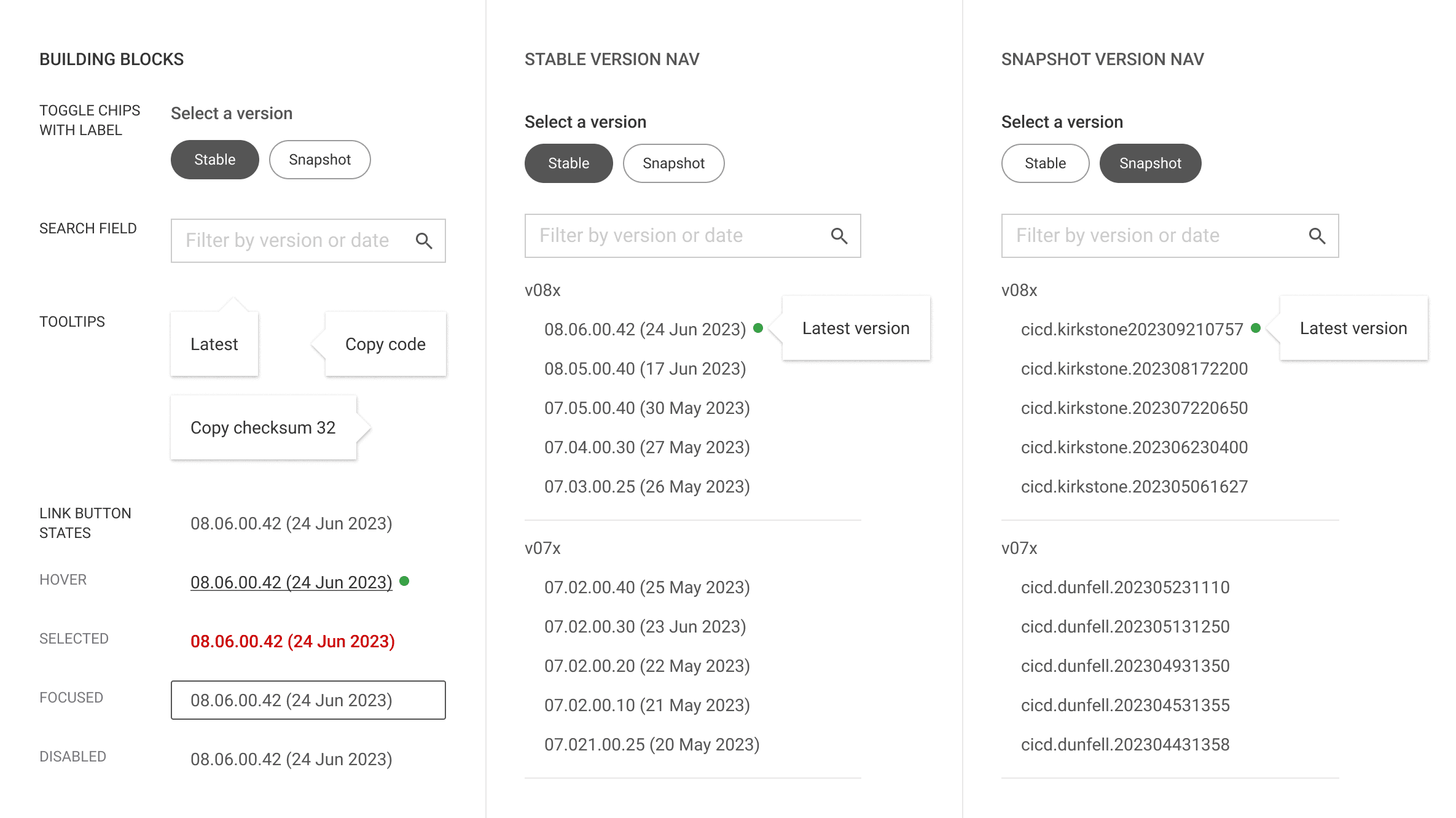
Streamlined navigation: Introduced a toggle control to switch between Stable and Snapshot versions to help customers stay oriented while they're searching.
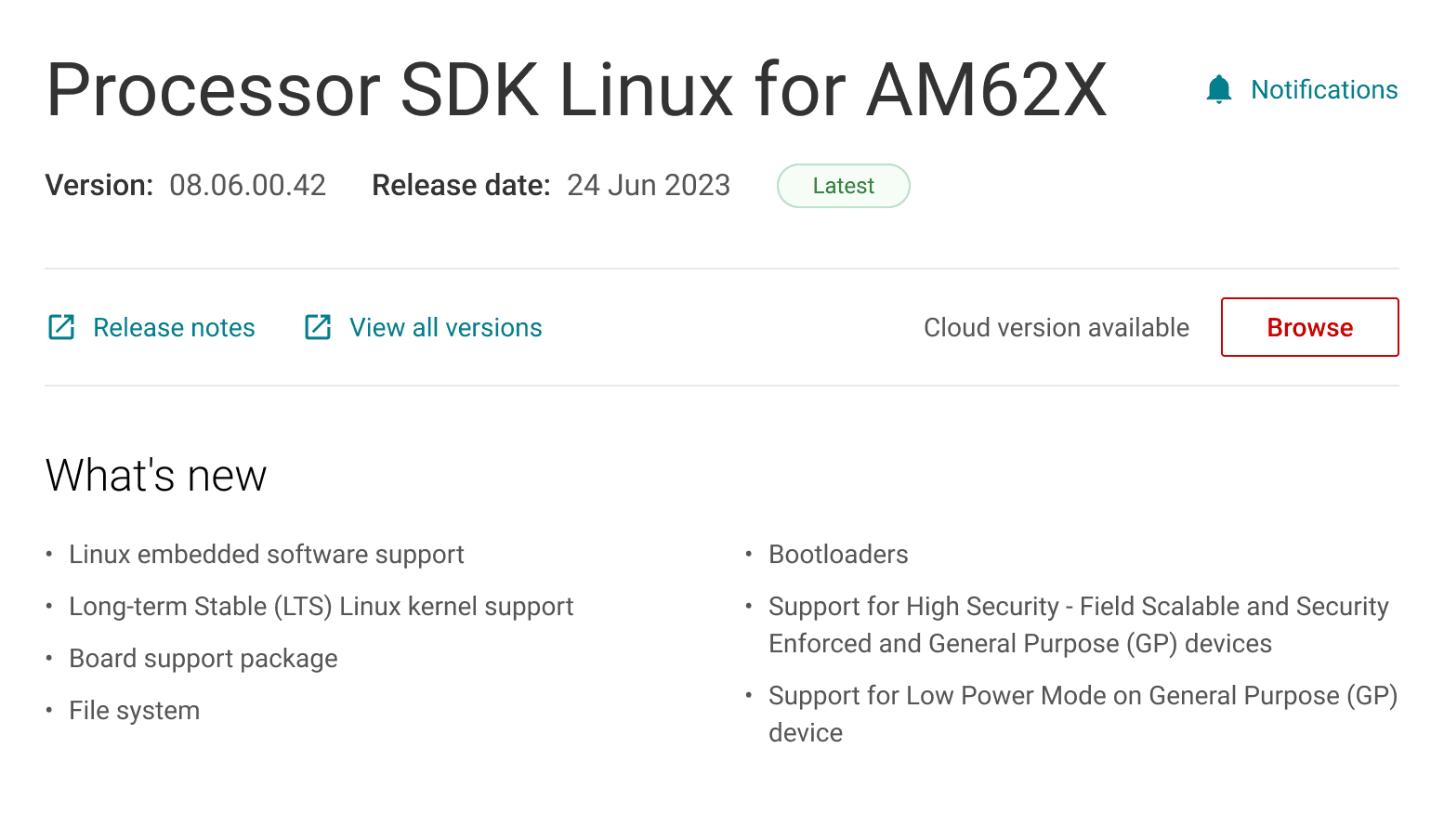
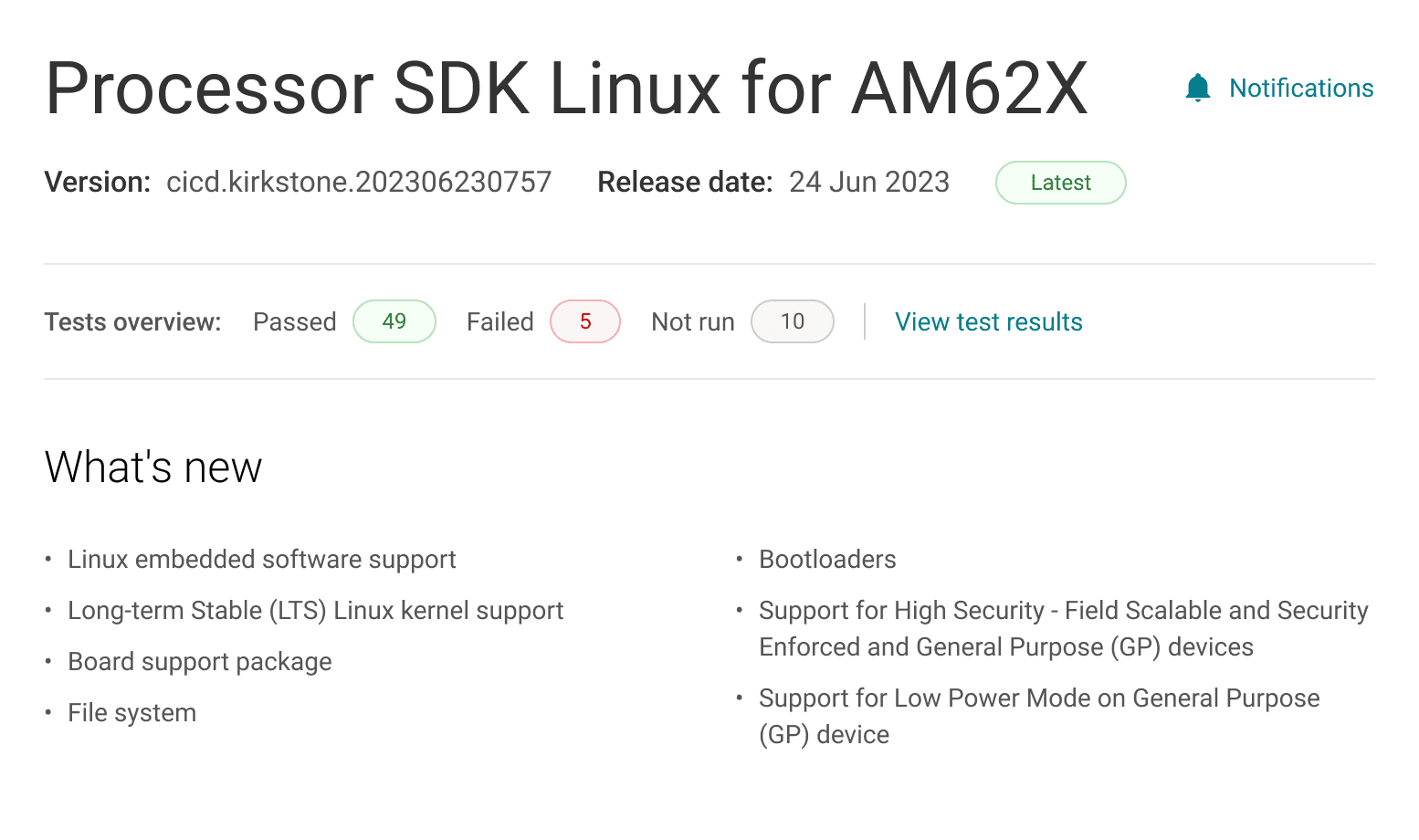
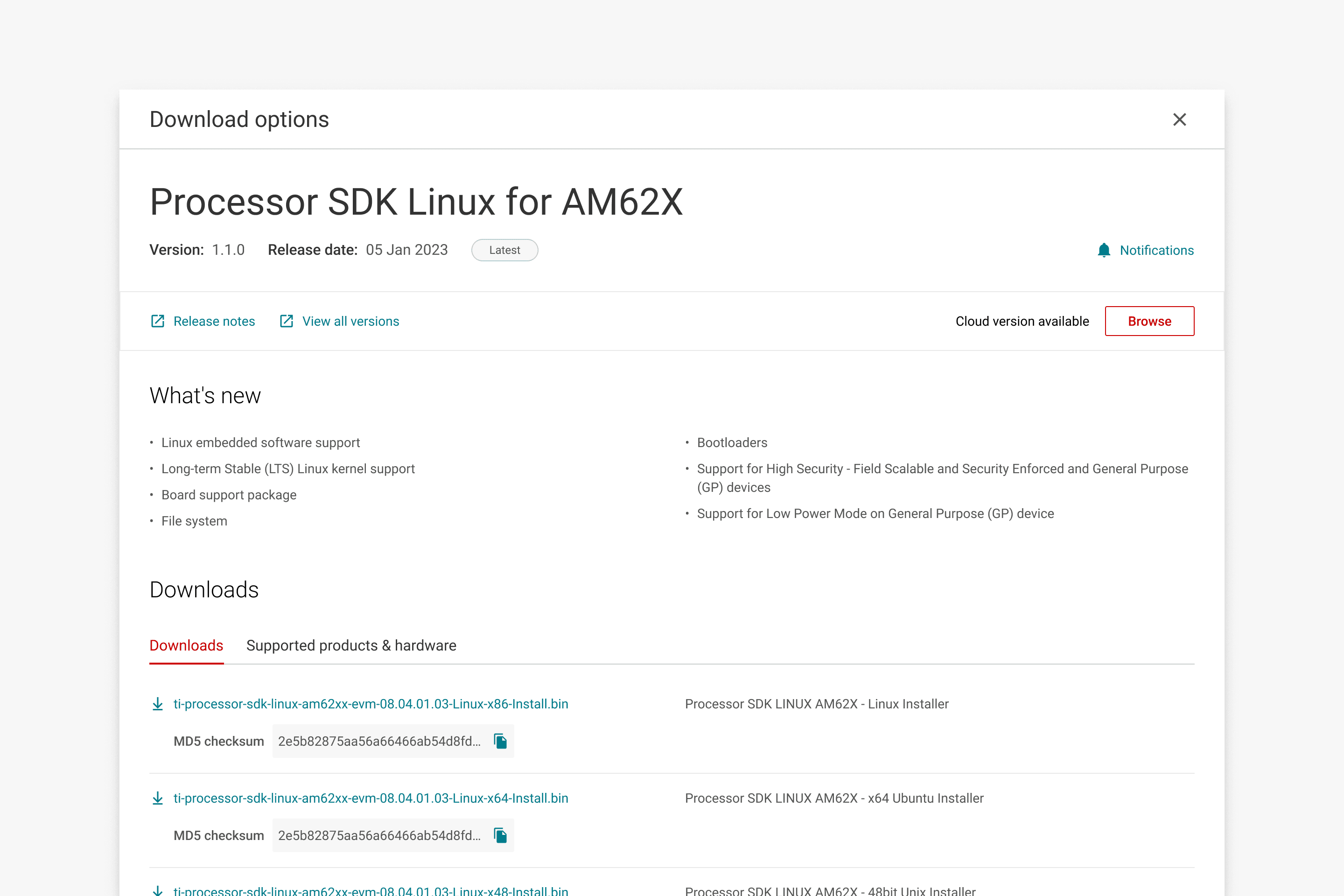
Our user tests revealed that developers preferred a single and consistent frame of reference to compare different versions.Unified content models: Redesigned the page-headers/ribbons to highlight the information that was most relevant to customers i.e. version number, release date and a test summary.
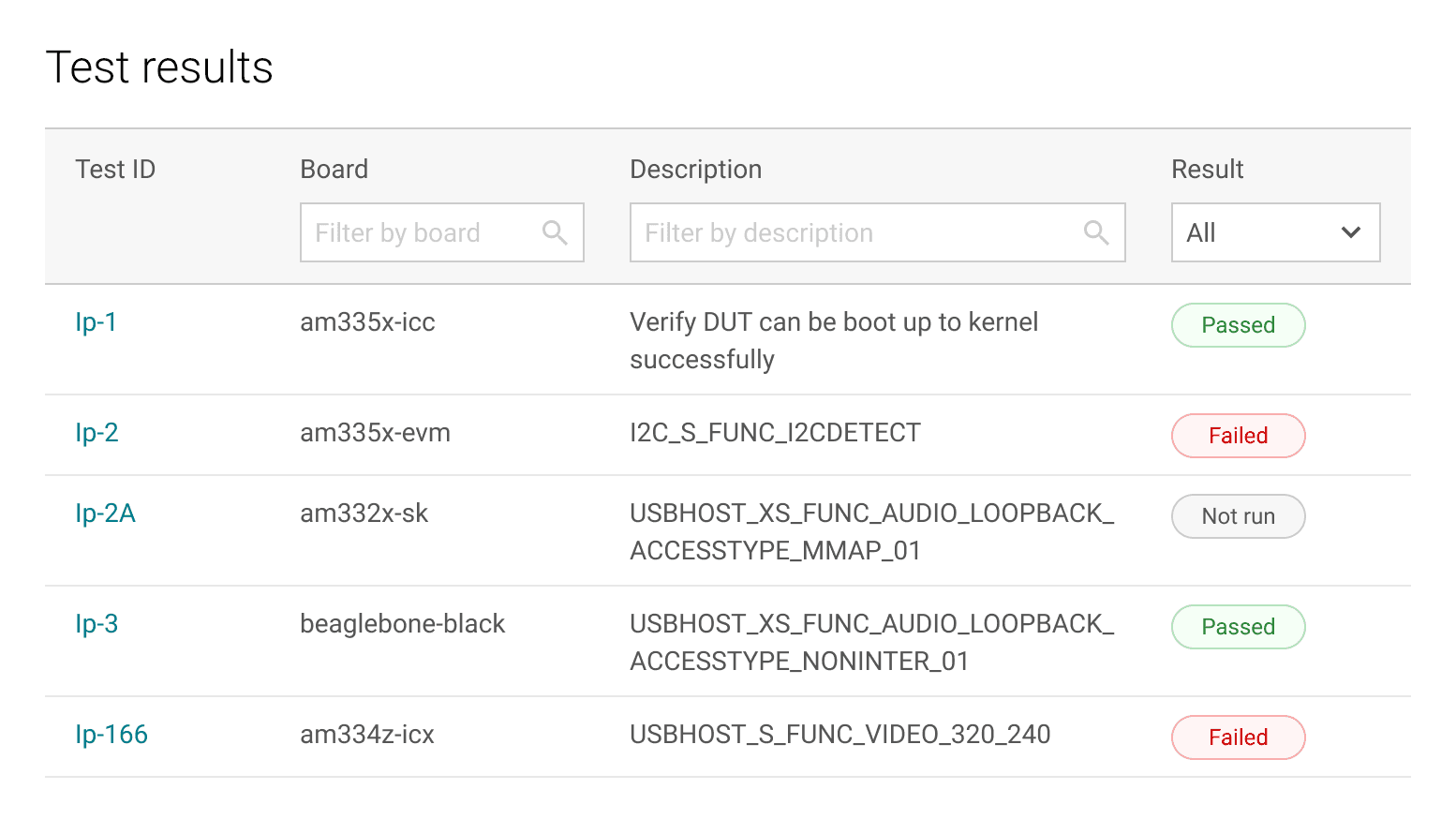
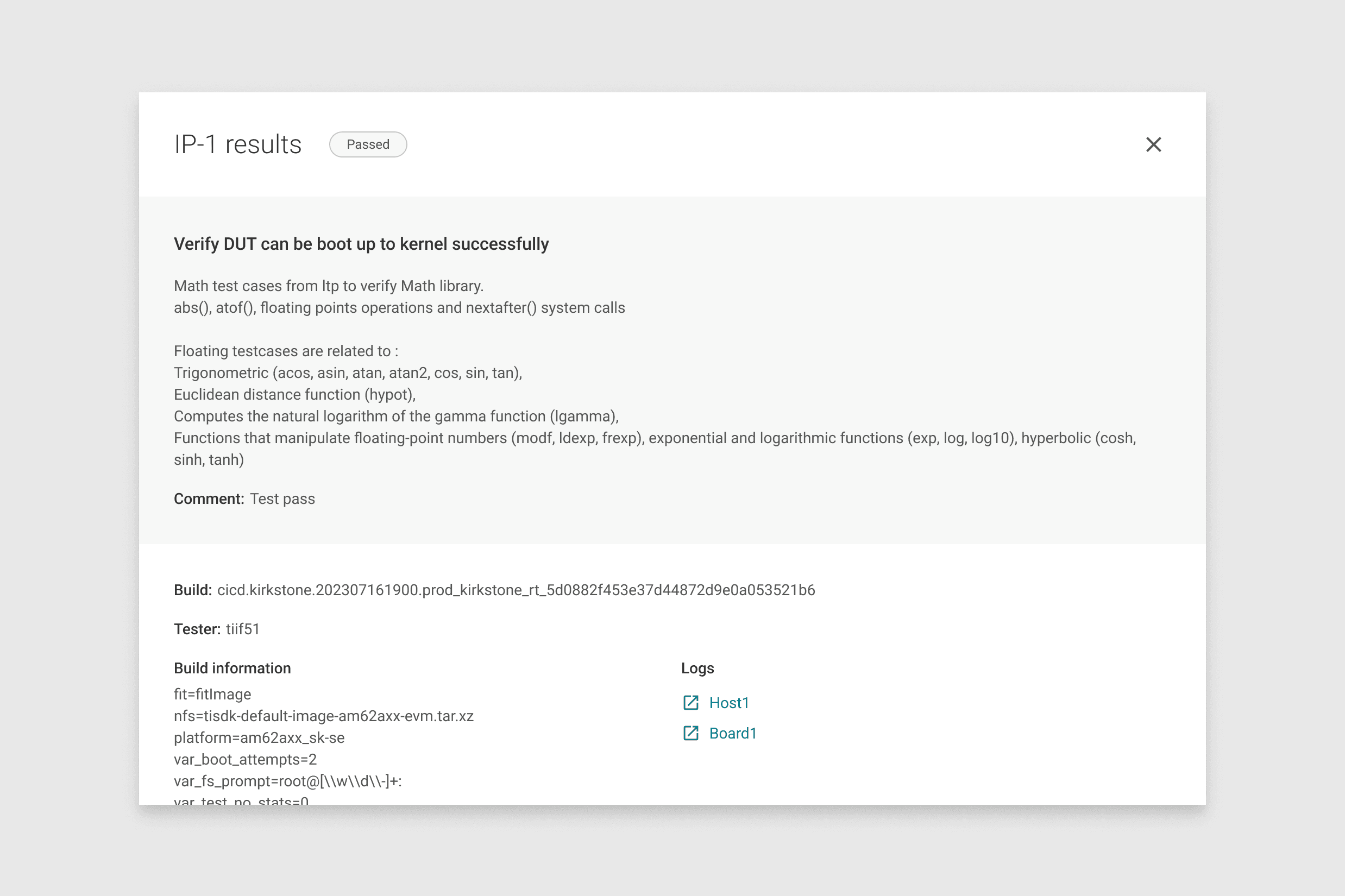
We probed developers and discovered that they wanted high level info before diving deeper into test results.Surfaced test results: The test-results summaries were linked to expandable tables if users wished to dive deeper into each test-result to view log data.
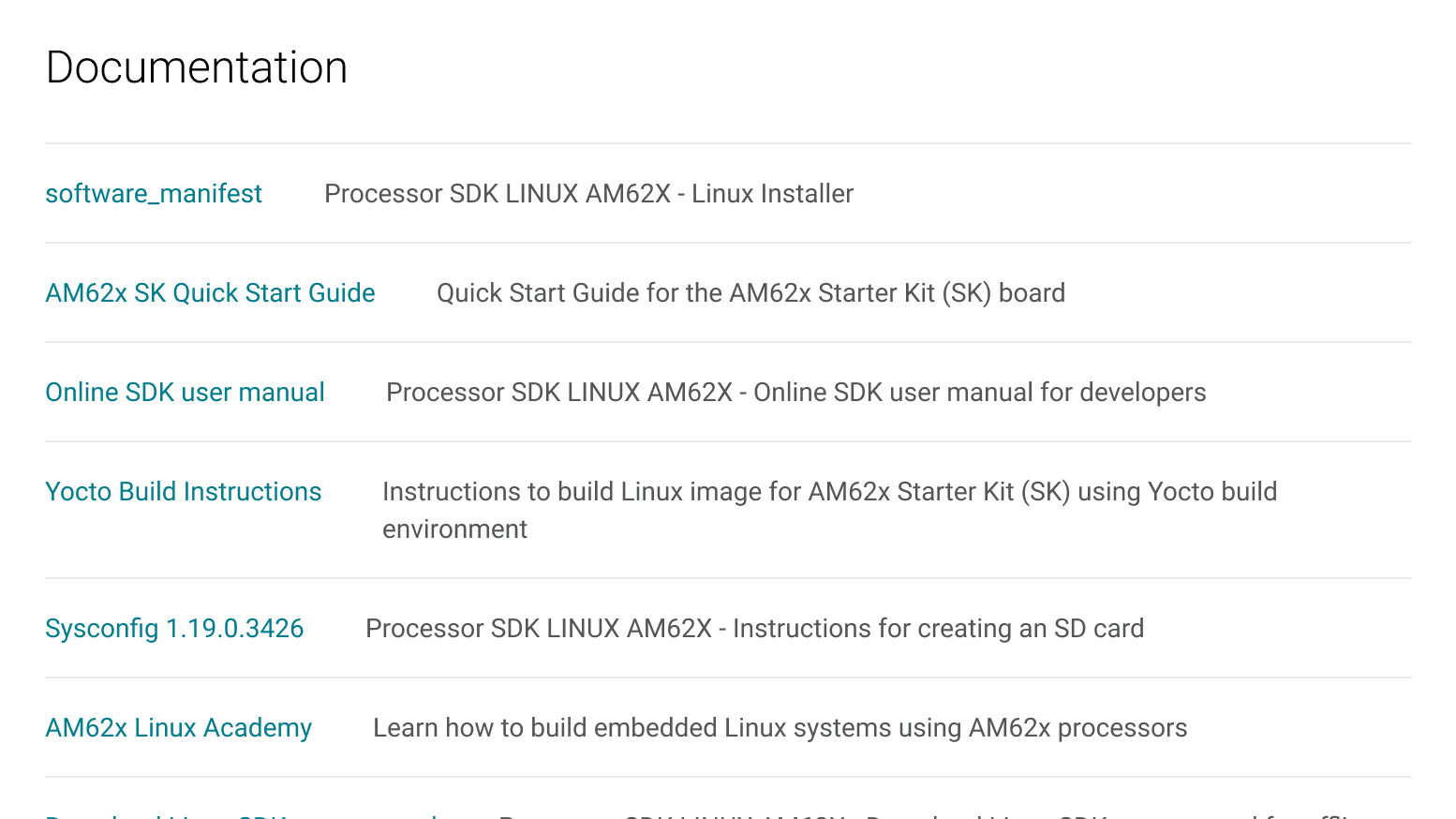
It enhanced transparency and trust as Developers could not only access technical information up-front but could also access the information archives.Design parity and coherence: We created similar content models and devised same interaction patterns between stable versions, snapshots and download option cards.
The idea was to make the experience predictable, reliable and trustworthy; for navigating, reviewing technical data and downloading the needed version.
Outcome and impact
Improved discovery success rate by 90% for finding the needed software.
Support tickets reduced by 73% as projected by TI Customer Support team.
Average time to download reduced to 15s, down from minutes/hours.
During the user tests, the participants found the new experience valuable and found the snapshots more transparent, reliable and trustworthy. It also ensured alignment of TI's CI/CD and Support teams to keep the delivery pipeline organized.
Role
Experience designer & Strategist
Responsibilities
- Authoring requirements
- Component specifications
- Design concept solution
- Design strategy
- Functional requirements
- Information architecture
- Technical specifications
Team
Back-end Developer, TI CI/CD
Creative director, UXD
Front-end developer, UXD
Product owner, TI CI/CD
Other TI CI/CD SMEs
Area
E-commerce, DevOps
Project duration
3 months
Clarity and high-quality of information builds credibility and confidence trust with customers.
Consistent experiences that follow conventional navigation and interaction patterns reduce friction, minimize user frustration and builds trust.
Surfacing information relevant to users can drastically improve adoption, engagement and conversions.
User test insights didn't just help us to make informed design decisions, they also equipped us with warrants to get buy-in from business and technical stakeholders.
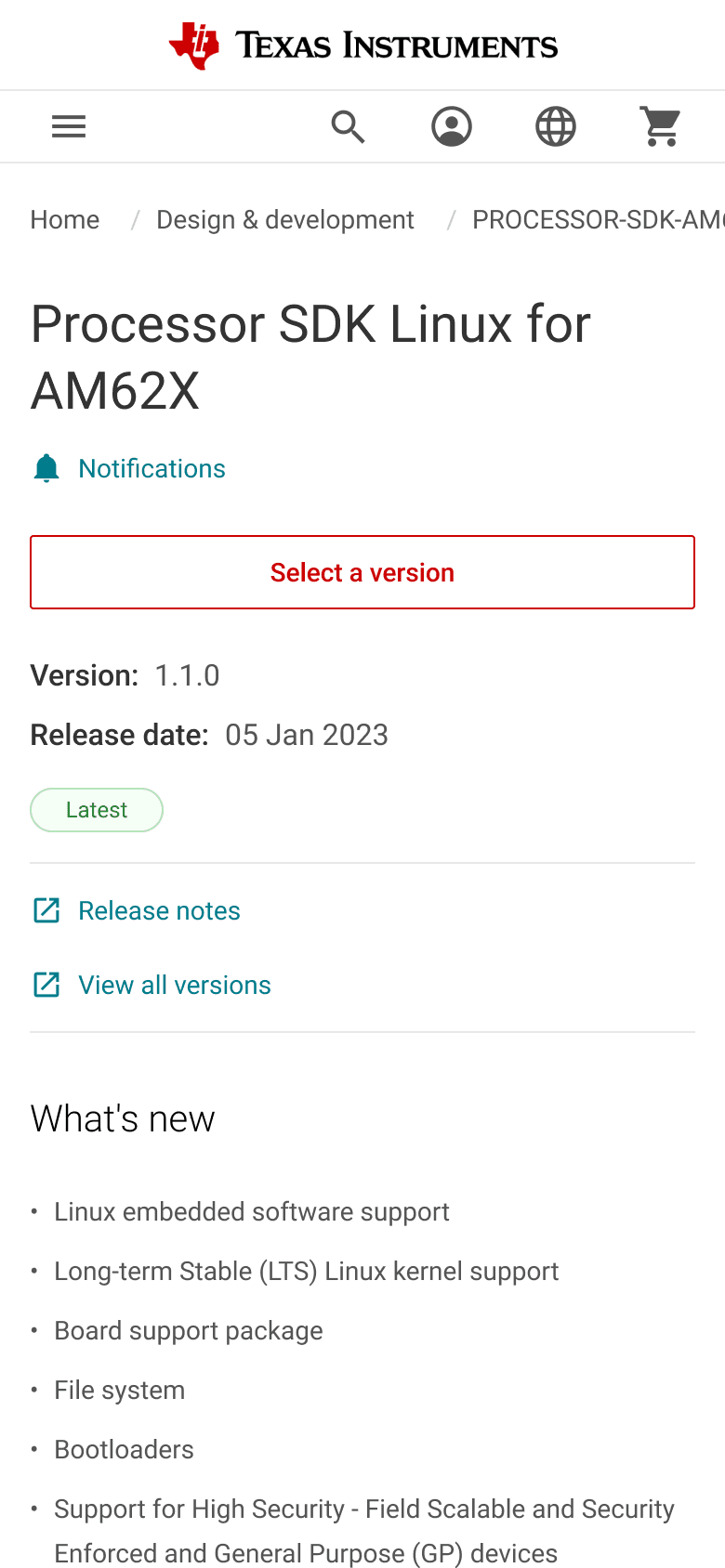
Stable release
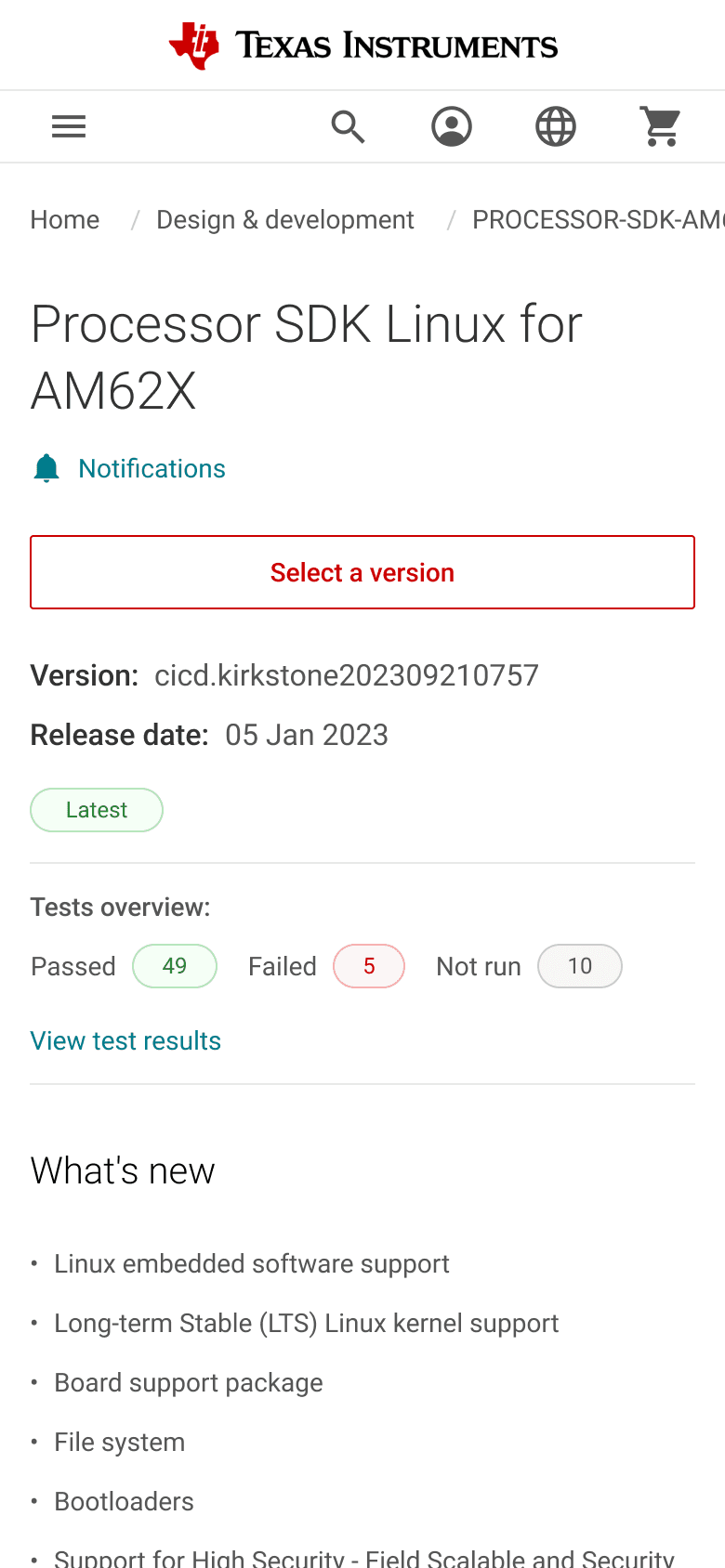
Snapshot version